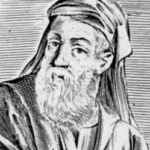
Epicurus Quotes

Epicurus (341-270 BCE) was an ancient Greek philosopher and sage who founded the influential Epicurean school of philosophy. A philosophy whose main goal was the attainment of happiness and tranquility of mind, mainly through the absence of pain and fear, through the cultivation of friendship, freedom and an examined life. It is likely that Epicurus received a platonic education when growing up and later studied under the rhetorician Nausiphanes, whom he didn’t like too much but who nevertheless introduced him to the Atomist philosophy of Democritus.

In 306-307 BCE, i.e. his early thirties, Epicurus created his own philosophical school in Athens. This school was called the “The Garden of Epicurus” and the Epicureans were referred to in ancient times as “those in the garden” (hoi apo tōn kepōn). The Epicureans were many and dedicated, as they supposedly made oaths of allegiance that went something like:

I shall be faithful Epicurus, whose doctrine I have chosen to follow freely.

The followers of Epicurus came to be known as Epicureans and the philosophy came to be known as Epicureanism. This was a kind of community where modesty, simplicity and virtue were the norms and ideals. Right before the entrance to the garden there supposedly was a watering can and a simple breadcake – which was to symbolize the fact that a person needs very little in this life.

The Basic Tenets of Epicureanism

The philosophy Epicurus can in many ways be seen as a materialistic philosophy as he did not recognize the gods of the masses, denied the existence of predestination or destiny, acknowledged man’s power to shape his own life.

The goal of Epicurean philosophy was to bring and induce a state of happiness (eudaimonia), pleasure (hēdonē), peace of mind and body (ataraxia), and absence of pain (aponia) in us humans. Ataraxia was seen as “the ultimate goal of wisdom.” One of the way ataraxia was achieved was through eliminating the fear of death and of the gods.

Epicurus taught, like the Cynics and Stoics, that to attain genuine satisfaction in life, one must limit one’s desires and needs, and this is the wisdom and path that leads towards a happier life. The more immoderate and greedy people are, the harder it is for them to attain joy. According to some historians, Epicurus remains one of the most misunderstood of the classical Greek philosophers, as he and his followers were condemned as self-gratifying, hedonistic and immoral people.

Epicurus is thought never to have married nor fathered any children. His last days were anything but pleasant from a physical perspective, as he suffered from kidney stones for years. He died in 270 BCE at the age of 72, most likely resulted from the stones and related gastric issues. Despite his prolonged physical pain, he supposedly remained cheerful to the end. After his death, Epicurean schools continued and flourished in the Hellenistic world as a main competitor of the Stoic schools.

In this article, I’ve decided to share some of the most insightful quotes by Epicurus:

Number of quotes found: 34

Wallpaper Settings

Text Settings

+

Layout Settings

+

Color Settings

+
0px
100%

Author Settings

+

Display Settings

+

Preset Themes

+

Man loses all semblance of mortality by living in the midst of immortal blessings.

1

— Epicurus

Source: Letter to Menoeceus

The greater the difficulty, the more the glory in surmounting it.

0

— Epicurus

Source: Quoted in Epicurus's Morals - 1712

Of all the means which wisdom acquires to ensure happiness throughout the whole of life, by far the most important is friendship.

0

— Epicurus

Source: Principal Doctrines

Let no one be slow to seek wisdom when he is young nor weary in the search of it when he has grown old. For no age is too early or too late for the health of the soul.

0

— Epicurus

Source: Letter to Menoeceus

Skillful pilots gain their reputation from storms and tempest.

0

— Epicurus

A free life cannot acquire many possessions, because this is not easy to do without servility to mobs or monarchs.

0

— Epicurus

Source: Quoted in The Philosophy of Epicurus - 1963

Self-sufficiency is the greatest of all wealth.

0

— Epicurus

Source: Quoted in The Essential Epicurus - 1993

The misfortune of the wise is better than the prosperity of the fool.

0

— Epicurus

It is impossible to live a pleasant life without living wisely and well and justly. And it is impossible to live wisely and well and justly without living a pleasant life.

0

— Epicurus

Source: Principal Doctrines

Of all the things which wisdom provides to make us entirely happy, much the greatest is the possession of friendship.

0

— Epicurus

If God listened to the prayers of men, all men would quickly have perished: for they are forever praying for evil against one another.

0

— Epicurus

Riches do not exhilarate us so much with their possession as they torment us with their loss.

0

— Epicurus

The time when most of you should withdraw into yourself is when you are forced to be in a crowd.

0

— Epicurus

Source: Quoted by Seneca

Don’t fear god,
Don’t worry about death;
What is good is easy to get, and
What is terrible is easy to endure.

0

— Epicurus

Source: Tetrapharmakos

Luxurious food and drinks, in no way protect you from harm. Wealth beyond what is natural, is no more use than an overflowing container. Real value is not generated by theaters, and baths, perfumes or ointments, but by philosophy.

0

— Epicurus

Source: Written on a esplanade wall in Oenoanda

It is possible to provide security against other ills, but as far as death is concerned, we men live in a city without walls.

0

— Epicurus

Source: Quoted in Epicurus - 1967

Is God willing to prevent evil, but not able? Then he is not omnipotent.
Is he able, but not willing? Then he is malevolent.
Is he both able and willing? Then whence cometh evil?
Is he neither able nor willing? Then why call him God?

0

— Epicurus

Death, therefore, the most awful of evils, is nothing to us, seeing that, when we are, death is not come, and, when death is come, we are not.

0

— Epicurus

Source: Letter to Menoeceus

The art of living well and the art of dying well are one.

0

— Epicurus

Source: Quoted in St. Paul and Epicurus - 1954

The just man is most free from disturbance, while the unjust is full of the utmost disturbance.

0

— Epicurus

Source: Principal Doctrines

It is better for you to be free of fear lying upon a pallet, than to have a golden couch and a rich table and be full of trouble.

0

— Epicurus

Source: Quoted in Great Traditions in Ethics - 2007

All sensations are true; pleasure is our natural goal.

0

— Epicurus

Do not spoil what you have by desiring what you have not; remember that what you now have was once among the things you only hoped for.

0

— Epicurus

Death does not concern us, because as long as we exist, death is not here. And when it does come, we no longer exist.

0

— Epicurus

Source: Quoted in Roman Philosophy and the Good Life - 2009

It is folly for a man to pray to the gods for that which he has the power to obtain by himself.

0

— Epicurus

Natural justice is a symbol or expression of usefulness, to prevent one person from harming or being harmed by another.

0

— Epicurus

Source: Principal Doctrines

Not what we have, but what we enjoy, constitutes our abundance.

0

— Epicurus

Misfortune seldom intrudes upon the wise man; his greatest and highest interests are directed by reason throughout the course of life.

0

— Epicurus

He who is not satisfied with a little, is satisfied with nothing.

0

— Epicurus

Source: Quoted in The Essential Epicurus - 1993

It is not so much our friends’ help that helps us, as the confidence of their help.

0

— Epicurus

Source: Quoted in The Greek Atomists and Epicurus: A Study - 1964