Zeno of Citium Quotes

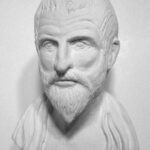
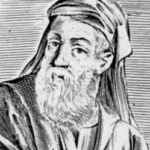
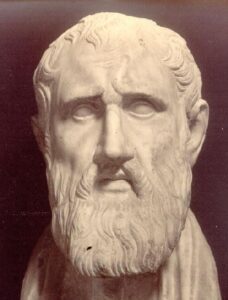
Zeno of Citium, born in 334 BCE, was the founder of the Stoic school of philosophy. Originally a Phoenician (Cyprus) merchant, he lived most of his life in mainland Greece after being shipwrecked off the coast of Attica. Most of the details concerning the life story of Zeno is derived from the biography written by Diogenes Laertius, the author of ‘Lives of Eminent Philosophers‘.

Early in his philosophical career Zeno studied under the cynic Crates of Thebes, the platonists Xenocrates and Polemon. He founded his own Stoic school of philosophy around the year 300 BCE in Athens. The stoics were initially referred to as the followers of Zeno but were later labelled ‘stoics’ because of the location, the Stoa Poikile, which was a famous site in ancient Athens, a place, or porch which Stoa literally means, where Zeno had most of his philosophical sessions with his disciples. Zeno taught in Athens for over 50 years, but supposedly refused to become an Athenian citizen because he wanted to remain loyal to his home country of Phoenicia. He died in 264 BCE.

Zeno mostly taught ethics, where he, like the Cynics before him and the many stoics after, argued that a good life, peace of mind and eudaimonia (happiness and/or blessedness) was derived from living a simple life in accordance and harmony with nature. Stoicism came to be one of the more popular schools of philosophy in the Greco-Roman world, starting from the Hellenistic period all through the Roman era.

Zeno, possibly the first anarchist in recorded history, wrote his own ‘Republic‘ or Politeia (Πολιτεία), his most famous work, in opposition to the ideal state proposed by Plato in his Republic. Though the work hasn’t survived, we nevertheless have a handful of references by other philosophers and historians concerning the content and general outline of the book. In his Republic, Zeno proposed a free and equal utopian society based on Stoic principles, a society where virtuous men and women would live together in simplicity, that is without private property, government, money, temples and laws.

With that said, here I’ve collected a handful of wise quotes by Zeno of Citium plus a few interesting quotes about him and the nature of his philosophy.

Number of quotes found: 10

Wallpaper Settings

Text Settings

+

Layout Settings

+

Color Settings

+
0px
100%

Author Settings

+

Display Settings

+

Preset Themes

+

Happiness is a good flow of life.

0

— Zeno of Citium

Source: Quoted by Stobaeus

All the good are friends of one another.

0

— Zeno of Citium

No evil is honorable: but death is honorable; therefore death is not evil.

0

— Zeno of Citium

Source: Quoted by Seneca

Wellbeing is attained by little and little, and nevertheless is no little thing itself.

0

— Zeno of Citium

Fate is the endless chain of causation, whereby things are; the reason or formula by which the world goes on.

0

— Zeno of Citium

That which exercises reason is more excellent than that which does not exercise reason; there is nothing more excellent than the universe, therefore the universe exercises reason.

0

— Zeno of Citium

Source: Quoted by Cicero

If melodiously piping flutes sprang from the olive, would you doubt that a knowledge of flute-playing resided in the olive? And what if plane trees bore harps which gave forth rhythmical sounds? Clearly you would think in the same way that the art of music was possessed by plane trees. Why, then, seeing that the universe gives birth to beings that are animate and wise, should it not be considered animate and wise itself?

0

— Zeno of Citium

Source: Quoted by Cicero

All things are parts of one single system, which is called Nature; the individual life is good when it is in harmony with Nature. In one sense, every life is in harmony with Nature, since it is such as Nature’s laws have caused it to be; but in another sense a human life is only in harmony with Nature when the individual will is directed to ends which are among those of Nature. Virtue consists in a will which is in agreement with Nature.

0

— Zeno of Citium

We have two ears and one mouth, so we should listen more than we say.

0

— Zeno of Citium

Source: Quoted by Diogenes Laërtius

One ought to seek out virtue for its own sake, without being influenced by fear or hope, or by any external influence. Moreover, that in that does happiness consist.

0

— Zeno of Citium

Source: Quoted by Diogenes Laërtius in The Lives: Book 7