
Mansur Al-Hallaj Quote Art
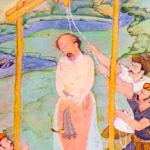
Source of Inspiration
For I have learned that
— Mansur Al-Hallaj
every heart will get
What it prays for
Most.Source: Tawasin - The Ta-Sin of the Point
PROMPT_LOG.TXT
In an ornate room characteristic of the Islamic Golden Age, the painting features a wise, contemplative figure sitting cross-legged on an intricate Persian rug. Their attire is richly adorned with gold and azure blue, echoing the lapis lazuli hues that dominate the scene. The walls are covered with intricate geometric patterns, interwoven with symmetrical arabesques that reflect the period's artistic grandeur. Sunlight filters through a stained glass window, casting colorful patterns on the floor. The figure’s eyes are closed, hands gently cupped in prayer, symbolizing deep reflection and yearning. In the background, a large, open book rests on a low table, its pages filled with delicate calligraphy. The quote, "For I have learned that every heart will get What it prays for Most," is artistically woven into the scene, elegantly inscribed in gold leaf along the top arch of the window, blending seamlessly with the surrounding patterns. The typography is fluid and graceful, reminiscent of ancient Arabic scripts, ensuring legibility while harmonizing with the painting's overall aesthetic.

Share Content